Parkinson Cutlery Adaptive
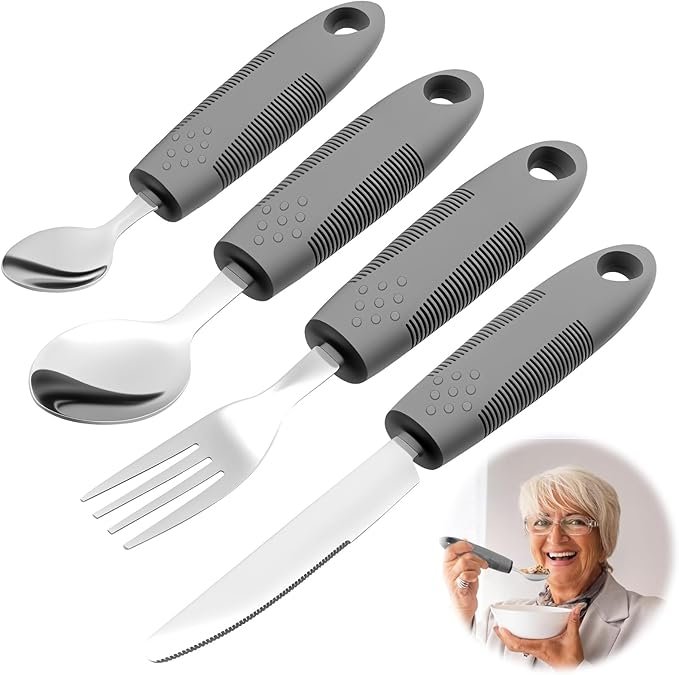
Parkinson’s Cutlery: Adaptive Cutlery with Thick Handles for Enhanced Comfort and Control
Living with Parkinson’s disease or other motor control challenges can make everyday tasks like eating frustrating and difficult. One of the most common issues people with Parkinson’s face is hand tremors, which can make it challenging to use regular utensils. Fortunately, there’s a solution: adaptive cutlery.
Parkinson’s cutlery with thick handles is specifically designed to address the difficulties faced by people with tremors, limited hand strength, or reduced fine motor control. In this guide, we’ll explore the benefits of adaptive cutlery, particularly those with thicker handles, and how they can improve independence and quality of life for individuals with Parkinson’s disease.
What is Parkinson’s Cutlery?
Parkinson’s cutlery refers to specially designed eating utensils intended to make dining easier for individuals with Parkinson’s disease, other neurological conditions, or mobility challenges. These utensils are tailored to improve grip, control, and comfort, addressing specific issues like tremors, arthritis, and limited hand strength.
One of the most effective features in Parkinson’s cutlery is the thick handle. These handles are often made from materials like soft rubber, ergonomic plastics, or foam, offering better grip and control. This helps users maintain a steady hold, reducing the likelihood of spills or difficulty in getting food to their mouths.
Key Features of Parkinson’s Cutlery with Thick Handles
- Ergonomic Design
Adaptive cutlery with thick handles is designed to fit comfortably in the hand, allowing for a more natural grip. The ergonomic shape can reduce the strain on fingers, hands, and wrists, making it easier to use without causing discomfort or pain. - Non-Slip Grip
The thicker handles typically come with a non-slip surface or textured coating that enhances grip, even for individuals with limited hand strength or dexterity. This is especially important for people with Parkinson’s tremors, as it helps prevent the utensil from slipping out of the hand. - Weight and Balance
Many Parkinson’s cutlery options are slightly weighted to help counteract tremors, providing a steadier hold while eating. The right balance of weight can make the utensil easier to control and feel more stable in the hand. - Adjustable Handles
Some adaptive cutlery sets feature adjustable handles, allowing users to customize the fit to their hand size and comfort level. This feature is particularly beneficial for individuals whose motor skills vary throughout the day. - Easy-to-Hold and Use
The thick handles help users to grip the utensil comfortably without applying excessive force. The handles are often wider and longer than traditional cutlery, making it easier to grasp and manipulate. - Dishwasher Safe
Many Parkinson’s adaptive cutlery sets are dishwasher-safe, which simplifies cleaning and maintenance, making them more convenient for daily use.
Benefits of Parkinson’s Adaptive Cutlery with Thick Handles
- Improved Independence
By offering a more comfortable and controlled way to eat, Parkinson’s adaptive cutlery allows individuals to retain their independence at mealtimes. The added support and easier grip enable users to eat more confidently without relying as much on assistance. - Reduced Tremor Impact
The thick handles absorb some of the movement from hand tremors, providing better stability while eating. This means fewer spills and less frustration when attempting to use standard utensils. - Enhanced Comfort
Regular utensils with narrow handles can cause discomfort over time, especially for people with joint pain or arthritis. The ergonomically designed handles of Parkinson’s cutlery reduce strain and allow for more comfortable mealtimes. - Increased Control and Precision
The non-slip grip and weight distribution make it easier to have precise control over the utensil, reducing the likelihood of food spilling and making mealtimes more enjoyable. - Customization for Different Needs
Parkinson’s cutlery sets often include a variety of utensils (spoons, forks, knives, and specialized tools) that can be customized to fit the specific needs of the user. Some sets also include accessories like built-in wrist supports or bent utensils to further reduce hand strain.
Types of Parkinson’s Cutlery with Thick Handles
There are several types of adaptive cutlery available, each designed to address different challenges faced by individuals with Parkinson’s or similar conditions.
1. Spoons and Forks with Thick Handles
- These basic utensils are equipped with ergonomic, cushioned handles to provide a comfortable grip and enhanced control while eating.
- Weighted options help counteract tremors, making it easier to hold and maneuver the utensil.
- Large, easy-to-grip handles provide a secure, stable grip for individuals with weak hands or reduced dexterity.
2. Bendable Cutlery
- Some Parkinson’s adaptive cutlery can be bent at various angles to make eating easier. For example, a fork or spoon can be adjusted to the right angle to avoid the need for excessive hand movement.
- This is particularly useful for individuals who have difficulty lifting or guiding food to their mouth.
3. Weighted Cutlery
- Weighted utensils are designed to help counteract tremors. By adding weight to the handle, the user has better control over the utensil, reducing the effects of shaking hands.
- These utensils help stabilize hand movements, making it easier to scoop food or cut through softer items like vegetables or meats.
4. Built-in Wrist Support Cutlery
- Some adaptive utensils come with integrated wrist supports, which help the user hold the utensil with minimal effort. These can be helpful for those with significant tremors or hand weakness.
- The wrist support keeps the utensil in place and provides stability, making it easier to keep the hand steady while eating.
5. Complete Adaptive Cutlery Sets
- These sets include a combination of spoons, forks, knives, and sometimes specialized items like sporks and scoops. All items are designed with thick, non-slip handles and are often weighted or adjustable for ease of use.
- Ideal for individuals who need a complete set of tools for daily dining.
How to Choose the Right Parkinson’s Cutlery
When selecting the right Parkinson’s cutlery with thick handles, consider the following factors:
- Grip Comfort: Look for utensils with handles that are thick enough to provide a comfortable grip but not so bulky that they become difficult to handle.
- Suction or Weight: Some individuals benefit from weighted utensils that counteract tremors, while others prefer lighter options. Experiment with different weights to find the right balance for your needs.
- Adjustability: If you have limited hand movement, choosing utensils with adjustable handles or bendable parts may help.
- Material: Choose a material that is both durable and easy to clean. Many adaptive cutlery options are made from stainless steel, rubber, or soft plastic that’s gentle on the hands.
- Special Features: Some people benefit from wrist support or angled utensils to further assist with eating. Select a product that aligns with your specific motor challenges.
Conclusion
Parkinson’s cutlery with thick handles is an excellent solution for those living with Parkinson’s disease, tremors, or other motor control issues. By offering improved grip, comfort, and control, these utensils make mealtime easier and more enjoyable. Whether you choose a weighted fork, an adjustable spoon, or a full adaptive cutlery set, the right tools can enhance independence, reduce frustration, and help individuals with Parkinson’s regain confidence at the dining table.
If you or a loved one is struggling with eating due to motor control difficulties, investing in adaptive cutlery can make a significant difference in improving daily life. Consider your specific needs, and choose a set that offers comfort, stability, and ease of use.
Affiliate Links Disclaimer: This post may contain affiliate links. If you make a purchase through these links, I may earn a small commission at no extra cost to you. Thank you for supporting this blog.