Airbrush Kit with Air Compressor
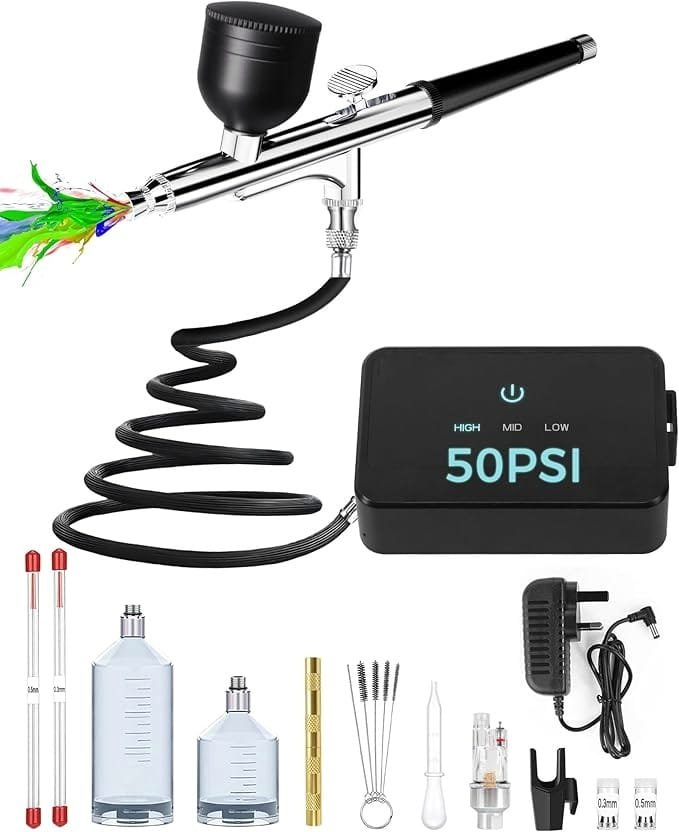
In 2026, airbrushing has seen a massive split between professional tabletop setups and the rise of high-pressure cordless kits. Whether you are a miniature painter, a makeup artist, or a DIY enthusiast, the right airbrush kit now prioritizes consistent pressure (PSI) and ease of maintenance.
Here is the 2026 guide to selecting the best airbrush and compressor combination for your projects.
1. Top-Rated Kits for 2026
Based on the latest benchmarks for air pressure stability and nozzle precision, these are the standout kits currently leading the market.
| Kit Model | Category | Key Specs | Best For |
|---|---|---|---|
| Timbertech ABPST06 | Professional Desktop | 1/6 HP, 3L Tank, 57 PSI | Heavy-duty modeling and automotive work. |
| Gaahleri Ambition GTS-06 | Precision Hobbyist | Quiet motor, 0.35mm Needle | High-detail miniatures and illustration. |
| Iwata NEO CN Kit | Quality Beginner | Reliable Gravity Feed, Silent | Users wanting “buy-it-for-life” reliability. |
| Oasser Cordless (36 PSI) | Portable / On-the-Go | Rechargeable, 3 Pressure Modes | Makeup, nail art, and barbering. |
| Master Airbrush G22 | Budget Entry-Level | Dual-Action, Cool Runner II | Students and those just starting out. |
2. The Core Components
An airbrush kit is only as good as its two main parts. In 2026, here is what you should look for in each:
The Airbrush Gun
- Dual-Action Trigger: Standard in 2026. Pressing down releases air; pulling back releases paint. This allows for seamless shading.
- Gravity Feed: The paint cup sits on top. It requires less air pressure to pull paint, which is better for fine detail work.
- Nozzle Sizes: * 0.2–0.3 mm: Best for hairlines, nail art, and fine miniatures.
- 0.5 mm+: Best for priming, base coats, and larger crafts.
The Air Compressor
- With Tank vs. Tankless: If possible, choose a compressor with a tank (like the Timbertech). The tank stores air so the motor isn’t always running, which prevents “pulsing” and provides a much smoother spray.
- Auto Start/Stop: This feature automatically shuts the motor off when you aren’t spraying, saving energy and reducing noise.
- Moisture Trap: Essential for 2026 standards. It prevents water from the humid air from mixing with your paint and causing “spatter” on your work.
3. Choosing Your PSI (Pressure)
Pressure is measured in Pounds per Square Inch (PSI). Different applications require different power levels:
- 10–20 PSI: Perfect for thin liquids like makeup, inks, and cake dyes.
- 20–35 PSI: The “sweet spot” for most acrylic paints, model building, and illustrations.
- 40+ PSI: Needed for thick primers, clear coats, and heavy metallic paints.
4. Pro-Tips for Longevity
- The “Water Run” Rule: Every time you switch colors, spray a cup of water or airbrush cleaner through the gun until it runs clear. This prevents clogs from forming deep in the nozzle.
- Don’t Over-Tighten: The needles and nozzles are fragile. When reassembling after cleaning, hand-tighten only. Using a wrench can snap the delicate nozzle threads.
- Ventilation: Even with non-toxic paints, airbrushing creates a fine mist. Always work in a ventilated area or use a dedicated spray booth with a filter.