Battery Powered Motion Sensor Outdoor Lights
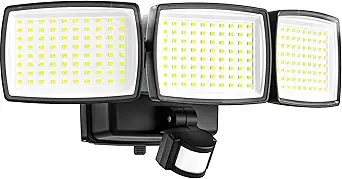
Battery‑Powered Motion Sensor Outdoor Lights — Smart, Easy, and Efficient Outdoor Illumination
Battery powered motion sensor outdoor lights are self‑contained lighting solutions that turn on automatically when they detect movement. They combine battery operation (no wiring needed) with motion sensing technology to provide security, convenience, and energy efficiency for outdoor spaces. These lights are ideal for driveways, walkways, entryways, backyards, garages, patios, and any area where you want light only when needed — without cluttering walls with cables or expensive electrical installs.
This guide explains how these lights work, their benefits, key features, installation tips, and how to choose the best model for your needs.
What Are Battery‑Powered Motion Sensor Outdoor Lights?
Battery‑powered motion sensor outdoor lights are stand‑alone lighting units that run on replaceable or rechargeable batteries and include a built‑in motion detector. When the sensor detects movement in its coverage area (typically within a set distance and angle), it activates the light. After a programmed time without further motion, the light automatically turns off.
Because they don’t require hardwiring to your home’s electrical system, you can place them almost anywhere — walls, fences, eaves, trees, posts, or even free‑standing poles.
How They Work
1. Motion Detection
A passive infrared (PIR) or microwave sensor “watches” a defined area for heat signatures or movement.
2. Battery Power Supply
Batteries supply energy without the need for nearby outlets. Some lights use AA/AAA replaceable cells; others include rechargeable lithium packs.
3. Light Activation
When motion is sensed at night or in low light, the light turns on immediately.
4. Auto Shut‑Off
After a set period (e.g., 20–90 seconds) with no motion, the light switches off to save battery.
Some models also include optional dusk‑to‑dawn controls that prevent activation during bright daylight.
Key Benefits
| Benefit | Explanation |
|---|---|
| Easy Installation | No wiring or electrician required |
| Enhanced Security | Lights up when motion is detected to deter intruders |
| Energy Efficiency | Operates only when needed, preserving battery life |
| Flexible Placement | Install almost anywhere you need light |
| Cost‑Effective | Lower installation and operation costs than wired systems |
| Battery or Rechargeable | Choice of power options depending on usage |
Typical Use Cases
Entryways and Doorways
Illuminate paths when someone approaches the house.
Driveways and Garages
Provide light when cars or people enter or exit.
Backyards and Patios
Add visibility for outdoor activities after dusk.
Walkways and Steps
Light up paths to reduce trips and falls at night.
Sheds and Outbuildings
Provide light for late‑night garden or tool use.
Key Features to Compare
| Feature | What to Consider |
|---|---|
| Sensor Range & Angle | How far and wide motion can be detected |
| Brightness (Lumens) | Higher lumens = brighter output |
| Battery Type | Replaceable vs rechargeable options |
| Lighting Mode Options | Dusk‑to‑dawn, motion only, steady on |
| Durability & Weather Rating | IP rating for water/dust resistance |
| Mounting Hardware Included | Screws, adhesive pads, stakes, etc. |
Sensor Range & Detection
Motion sensors vary in detection distance and angle:
- Distance: 5–12 meters (15–40 feet) typical
- Angle: 90°–180° field of view
A wider angle and longer detection distance are better for open spaces like driveways, while narrower, focused sensors can work well for doors or patios.
Brightness & Light Output
Light output is measured in lumens:
- 200–400 lumens: Good for path markers, subtle accent lighting
- 400–800 lumens: Comfortable general outdoor lighting
- 800+ lumens: Bright area lighting for security and large spaces
Choose based on whether you want a soft glow or a bright security light.
Power Options: Replaceable vs Rechargeable
Replaceable Batteries
- Uses AA/AAA cells
- Easy to swap out when drained
- Generally lower cost upfront
Rechargeable Batteries
- Built‑in lithium or similar
- Recharge via USB or solar panel accessories
- Lower long‑term cost and less waste
Solar‑Assisted Rechargeable
Some models include solar panels that recharge the battery, extending runtime and reducing maintenance.
Weatherproofing & Durability
Outdoor lights must handle rain, heat, dust, and cold. Look for:
- IP44 or higher rating — water resistance against splashes
- Rust‑resistant housing — longer life in outdoor environments
- Impact resistance — for lawn or pathway mounting
A higher IP (Ingress Protection) number means better protection (e.g., IP65 resists jets of water and dust).
Installation Tips
- Choose Height Wisely
Mount 1.8–2.5 meters (6–8 feet) high for optimal motion detection. - Aim Sensor Toward Pathways
Sensor should face the approach direction for accurate triggering. - Avoid Obstructions
Bushes or objects can block sensor range and cause false triggers. - Adjust Sensitivity
Many models let you set sensitivity to reduce false activations from pets or moving branches. - Use Included Mounting Hardware
Screws generally offer the most secure mounting; adhesives or stakes work for temporary placement.
Modes & Settings
Most lights offer multiple modes:
- Motion Only: Light stays off until motion is detected
- Dusk to Dawn: Lights stay on automatically when it’s dark
- Motion + Dim Standby: Dim light until motion, then full brightness
- Manual/Constant On: Light stays on until manually switched off
Mode selection can greatly affect battery life and usability for your scenario.
Battery Life Considerations
Battery life depends on:
- Sensor activity frequency
- Brightness level
- Battery capacity/type
A light that’s triggered frequently in motion mode will deplete batteries faster than one in dusk‑to‑dawn low‑power mode.
Rechargeable models with solar support can extend battery life indefinitely with enough sunlight.
Maintenance & Troubleshooting
- Replace or recharge batteries when lights become dim or slow to trigger
- Clean motion sensor lens periodically to ensure accurate detection
- Keep solar panels clean if your model includes them
- Check mount stability to prevent sagging or misalignment
Safety & Best Practices
- Mount away from direct wind or rain for sensor longevity
- Avoid facing sensors toward busy streets (reduces false triggers)
- Position lights to avoid shining directly into neighbors’ windows
- Test motion range before final installation
Choosing the Right Model
Ask yourself:
- Where will it go? Path, doorway, backyard, garage
- How bright should it be? Soft accent or strong security light
- How do I want it powered? Replaceable, rechargeable, or solar
- What detection range do I need? Wide open areas vs restricted zones
- How long should battery last? Less maintenance vs frequent use
Match features to your outdoor layout and how often people or vehicles pass through.
Final Summary
Battery‑powered motion sensor outdoor lights offer an efficient, flexible, and cost‑effective way to illuminate outdoor spaces. They enhance security, improve visibility, and eliminate the need for wiring or complex installation. With adjustable brightness, multiple operational modes, and weather‑proof designs, these lights bring convenience and peace of mind to every outdoor area — from backyards and pathways to entryways and garages.
To choose the right one, focus on detection range, brightness (lumens), power options, weatherproof ratings, and ease of installation. With the right configuration, you’ll enjoy automatic lighting that’s smart, reliable, and energy‑efficient.
*Disclosure: As an Amazon Associate, this content may earn a commission from qualifying purchases at no additional cost to you.*