Newly Upgraded Chip-Ultrasonic Pest Repeller
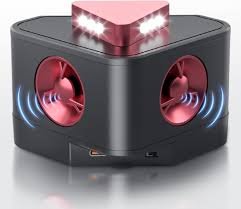
Newly Upgraded Chip-Ultrasonic Technology: The Future of Precision and Efficiency
The rapid advancements in technology continue to reshape industries, and one of the most exciting developments is the newly upgraded chip-ultrasonic technology. This innovative combination of semiconductor chips and ultrasonic waves is revolutionizing fields ranging from medical diagnostics and industrial applications to consumer electronics and robotics. In this article, we’ll delve into what chip-ultrasonic technology is, its upgrades, and how it’s poised to impact various industries.
What is Chip-Ultrasonic Technology?
Chip-ultrasonic technology refers to the integration of semiconductor chips with ultrasonic systems. Ultrasonic technology utilizes high-frequency sound waves (above the human hearing range of 20 kHz) to measure, detect, or manipulate objects. By incorporating these systems into semiconductor chips, manufacturers can create highly efficient, miniaturized devices that leverage the power of sound waves for a range of applications, from sensing and imaging to cleaning and material manipulation.
The key upgrade here lies in the integration of ultrasonic sensors directly onto chips or their integration into smart devices, making these systems more compact, precise, and cost-effective.
What’s New in the Upgraded Chip-Ultrasonic Technology?
The newest upgrade to chip-ultrasonic technology marks a significant leap in performance, accuracy, and applicability. Some of the key advancements include:
1. Enhanced Precision and Sensitivity
- The new chips feature enhanced signal processing capabilities, enabling more precise measurements and detection capabilities. Ultrasonic sensors can now detect objects, distances, and even structural issues with much greater accuracy. This is especially valuable in applications where minute variations need to be measured, such as in medical imaging or quality control in manufacturing.
2. Smaller and More Power-Efficient
- Miniaturization is one of the most significant improvements. The upgraded ultrasonic chips are smaller and more power-efficient, reducing the overall energy consumption while increasing the processing speed. This makes these chips ideal for portable devices or applications that require battery-powered sensors, such as wearables or IoT (Internet of Things) devices.
3. Faster Data Processing
- The upgraded chips now feature faster data processing capabilities, which means they can process ultrasonic signals in real-time, enabling quicker feedback loops for applications like object detection, gesture control, and adaptive robotics.
4. Improved Range and Frequency Response
- The new chips offer an expanded frequency response range, allowing ultrasonic waves to be used for a wider variety of tasks, from detecting minute fractures in materials to sensing objects at greater distances. This makes them more effective in industries like automotive (e.g., parking sensors), robotics, and environmental monitoring.
5. Integrated AI and Machine Learning
- Some of the most advanced chip-ultrasonic systems now integrate AI algorithms and machine learning capabilities directly onto the chip. This allows the system to process ultrasonic data more intelligently, identifying patterns or anomalies without needing to send raw data to external processors. Such capabilities are especially useful in predictive maintenance, health diagnostics, and smart home devices.
Applications of Newly Upgraded Chip-Ultrasonic Technology
The upgraded chip-ultrasonic technology opens up new possibilities across a wide range of sectors. Here are some of the major industries that stand to benefit from this innovation:
1. Healthcare and Medical Diagnostics
- Ultrasound imaging is already a staple in medical diagnostics. However, with the newly upgraded chips, the resolution and accuracy of these systems can be vastly improved. Miniaturized ultrasonic sensors integrated into handheld devices could lead to more affordable and portable medical imaging solutions, even for remote or underserved areas.
- Non-invasive diagnostics: Chips embedded with ultrasonic technology could also be used for non-invasive diagnostics, such as monitoring blood flow or detecting tumor markers without requiring traditional biopsy or blood tests.
2. Industrial Applications and Quality Control
- Material testing: Upgraded chip-ultrasonic systems can now inspect materials for faults, cracks, and other structural weaknesses with unparalleled precision. This is useful for industries like aerospace, automotive, and construction, where material integrity is crucial.
- Automation and robotics: Ultrasonic sensors integrated into robotic systems allow for more precise object detection, environment mapping, and collision avoidance, which improves the safety and efficiency of industrial robots.
3. Consumer Electronics
- Smartphones and wearables: Ultrasonic chips are being used in smartphones for gesture control and screen protection. These chips allow for ultrasonic-based touchless controls, which are becoming increasingly important in the wake of hygiene-conscious trends.
- Smart home devices: Devices such as smart thermostats, home security systems, and robotic vacuum cleaners now rely on ultrasonic sensors to navigate, detect obstacles, and even measure air quality.
4. Automotive and Transportation
- Ultrasonic sensors are widely used in parking assist and collision detection systems in modern cars. The newly upgraded chips enhance these sensors’ capabilities by improving the detection range and enabling real-time data processing for more accurate feedback to the driver.
- Self-driving cars: Autonomous vehicles benefit from ultrasonic sensors that allow them to “see” their environment in 360 degrees. The new chips enhance the vehicle’s ability to detect obstacles, pedestrians, and other vehicles in various environmental conditions.
5. Environmental Monitoring
- Upgraded chip-ultrasonic sensors are also being used in environmental applications, such as flood monitoring and water quality analysis. By using ultrasonic waves to measure water levels, sediment thickness, or even detect underwater anomalies, these chips can help in real-time environmental monitoring and early-warning systems for natural disasters.
6. Agriculture and Farming
- Crop monitoring: Ultrasonic sensors can be used to monitor soil conditions, plant growth, and detect pests or disease. The new chips enable more efficient tracking, leading to smarter, data-driven farming practices.
- Livestock tracking: For farmers who need to monitor livestock health and movement, upgraded ultrasonic chips can provide precise data to track animal behavior and location, ensuring better care and management.
Challenges and Future Outlook
While the potential for upgraded chip-ultrasonic technology is immense, there are a few challenges to overcome:
- Cost of Integration: Integrating ultrasonic sensors into various applications, particularly in consumer electronics or wearables, can add to production costs. However, as the technology matures and becomes more widely adopted, the cost should decrease over time.
- Data Security and Privacy: With the increased use of ultrasonic sensors in connected devices, data security concerns may arise, particularly in healthcare and consumer devices. It’s essential to ensure that sensitive data is processed securely and responsibly.
- Market Adoption: The widespread adoption of chip-ultrasonic technology will require education and trust-building among businesses and consumers. As more use cases and successful implementations are demonstrated, adoption will likely accelerate.
Conclusion
The newly upgraded chip-ultrasonic technology is at the forefront of innovation, offering significant advancements in accuracy, efficiency, and miniaturization. From healthcare and industrial applications to consumer electronics and environmental monitoring, the integration of ultrasonic sensors with chips opens up endless possibilities for the future.
As the technology continues to evolve, we can expect to see even more innovative applications and improvements in performance, making chip-ultrasonic technology a cornerstone in a wide array of industries. Whether you’re in manufacturing, healthcare, automotive, or consumer tech, it’s clear that this technology will play a pivotal role in shaping the future of how we interact with our world.