Vintage Record Player with External Speakers
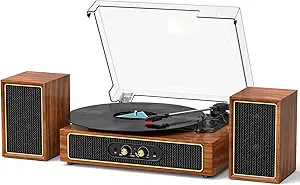
Vintage Record Player with External Speakers – Complete Buying Guide & Review
Vinyl records remain one of the most cherished physical music formats because of their iconic sound quality, artwork presentation, and tactile experience. For many music enthusiasts, a Vintage Record Player with External Speakers is the ideal way to enjoy both classic analog playback and powerful, rich sound.
This detailed affiliate blog will explain what a vintage record player with external speakers is, how it works, what features to look for, the types of systems available, setup tips, and key comparison tables to help you choose the right product for your listening setup.
What Is a Vintage Record Player with External Speakers?
A Vintage Record Player with External Speakers is a vinyl turntable designed to play records in analog format and connect to a pair of external speakers for amplified audio output. Unlike built-in speaker models, external speakers deliver fuller sound, stronger bass response, better volume range, and more immersive stereo imaging.
Vintage-style players often combine classic or retro aesthetics with modern performance enhancements such as Bluetooth, integrated preamps, USB outputs, and compatibility with contemporary audio systems — while maintaining the classic look and feel of older turntables.
How It Works
A complete vintage record player system typically consists of:
- Turntable Unit: Spins vinyl records at standard rotational speeds.
- Tonearm and Cartridge: The tonearm holds the cartridge, and the stylus (needle) reads grooves on the vinyl to generate an audio signal.
- Preamp (Internal or External): Amplifies the phono signal to line-level so it can be sent to external speakers.
- External Speakers: Powered (active) or passive speakers connected through an amplifier or receiver.
The audio signal flows from the turntable through the preamp and into the external speakers, producing richer sound than integrated speaker setups.
Key Benefits
- Enhanced audio quality compared to built-in speaker systems
- Ability to choose higher-quality speakers to match your space
- Classic styling that complements traditional and modern interiors
- Expandable setup for future speaker or component upgrades
- Flexible connectivity for Bluetooth, wired inputs, and USB outputs
Important Features to Consider
When selecting a vintage record player with external speakers, keep the following features in mind:
| Feature | Why It Matters |
|---|---|
| Preamp Included | Simplifies connection to powered speakers without extra equipment |
| External Speaker Quality | Determines overall sound performance |
| Connectivity Options | Bluetooth, USB, RCA, and auxiliary increase versatility |
| Drive System | Belt-drive versus direct-drive affects noise and stability |
| Cartridge & Stylus Quality | Affects audio clarity and playback accuracy |
| Speed Support | Ensures compatibility with different vinyl formats |
| Build Quality & Materials | Impacts durability and long-term performance |
Turntable Components Explained
Drive System
- Belt-Drive: Uses an elastic belt to connect the motor to the platter, reducing vibration and motor noise. Ideal for home listening.
- Direct-Drive: The motor directly drives the platter offering more consistent speed and faster startup. Common in professional or DJ setups.
Cartridge and Stylus
The cartridge holds the stylus, which tracks the vinyl grooves. Higher-quality cartridges usually offer better sound fidelity and clearer high frequencies. Some record players allow user-replaceable cartridges for future upgrades.
External Speaker Options
Powered (Active) Speakers
Powered speakers have built-in amplifiers and connect directly to the turntable (if the turntable has a built-in preamp). These speakers are easy to set up and ideal for most home setups without additional equipment.
Passive Speakers + Amplifier
Passive speakers require an external amplifier or AV receiver to power them. This setup allows for higher customization and often better audio performance, but it requires more components and setup.
Connectivity Overview
| Connectivity | What It Does |
|---|---|
| RCA Output | Standard wired connection to external speakers or amplifier |
| Bluetooth | Wireless streaming to compatible speaker systems |
| USB Output | Digitize vinyl collection to a computer |
| Auxiliary Input | Connect other audio sources |
A versatile connectivity suite increases the usability of your system beyond just vinyl playback.
Supported Record Speeds
Most vintage record players support the following standard speeds:
| Speed | Record Type |
|---|---|
| 33 1/3 RPM | Standard LP albums |
| 45 RPM | Singles and extended play records |
| 78 RPM | Older shellac records (available on select models) |
Be sure to choose a model that supports the speeds in your record collection.
Pros and Cons
| Pros | Cons |
|---|---|
| Superior sound quality with external speakers | Requires additional components compared to built-in players |
| Customizable audio setup | Higher cost than basic all-in-one players |
| Classic and stylish design | May require more setup and space |
| Ability to upgrade speakers or components | Passive speakers need an amplifier |
| Flexible connectivity | Sound quality depends on speaker choice |
Price and Value Guide
| Price Range | Typical Features | Recommended For |
|---|---|---|
| Budget Range | Basic turntable and powered speakers | Casual listeners |
| Mid-Range | Better components and connectivity | Everyday music listeners |
| Premium Range | High-end components and upgrade options | Audiophiles and dedicated systems |
How to Set Up Your Vintage Record Player with External Speakers
Setup with Powered Speakers
- Place the turntable on a stable, vibration-free surface.
- Connect the turntable’s audio output (RCA or other) to the powered speakers.
- If the player has a built-in preamp, enable it for direct connection.
- Position the speakers for balanced sound staging.
- Play a record and adjust volume levels.
Setup with Passive Speakers + Amplifier
- Connect the turntable to an amplifier or receiver using RCA cables.
- Connect passive speakers to the amplifier using speaker wire.
- Ensure the correct preamp settings are selected.
- Adjust sound settings on the amplifier and enjoy.
Proper setup ensures optimal performance and minimizes distortion or interference.
Choosing the Right System
To choose the best vintage record player with external speakers:
- Decide between powered speakers or a separate amplifier + passive speakers.
- Confirm whether the turntable includes a built-in preamp to simplify setup.
- Check that the model supports the record speeds in your collection.
- Review available connectivity options including Bluetooth, USB, and wired outputs.
- Evaluate speaker quality and compatibility for your room size and sound preference.
Balancing these considerations will help you select a system that matches your sound expectations and lifestyle.
Feature Comparison Table
| Feature | Importance |
|---|---|
| External Speaker Quality | Determines the clarity and richness of sound |
| Preamp Inclusion | Simplifies setup and reduces extra equipment needs |
| Connectivity Options | Adds flexibility for modern devices and workflows |
| Drive System | Ensures consistent playback and low noise |
| Cartridge & Stylus Quality | Affects sound detail and record tracking |
Disclaimer
This article contains general informational content about vintage record players with external speakers and does not constitute professional audio advice. As an Amazon Associate, we may earn from qualifying purchases made through affiliate links included in this blog. Product prices, availability, and features may change at any time without prior notice. Always review product details on the official Amazon product page before making a purchase.