Food Vacuum Sealer Machine — Complete Guide to Freshness, Storage & Buying Tips
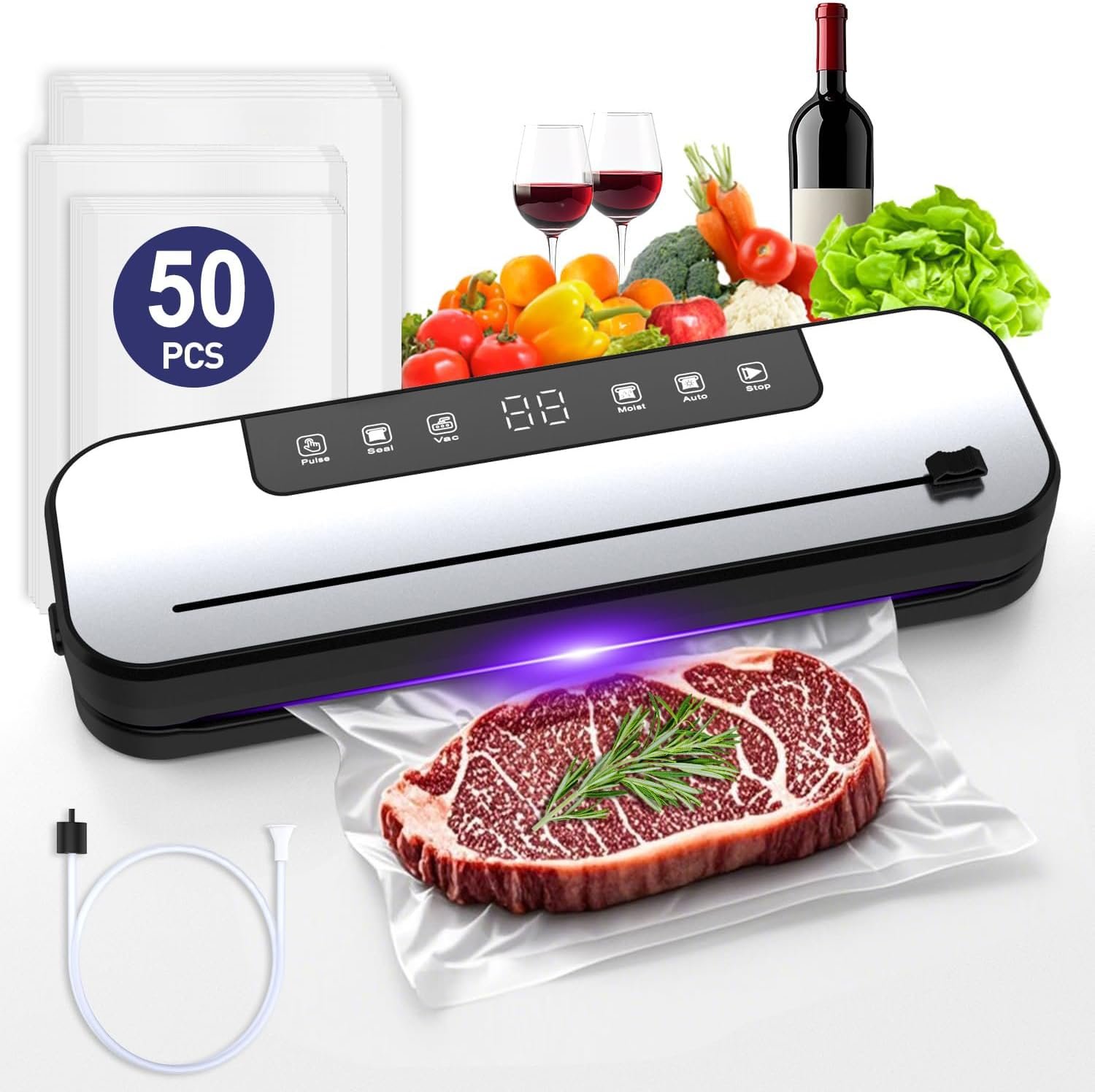
A food vacuum sealer machine is a kitchen appliance that removes air from specially designed bags or pouches and then seals them airtight. This process helps food stay fresh far longer than storing it in regular containers or plastic bags — perfect for meat, produce, leftovers, baked goods, dry foods, and more.
How It Works
- Place Food in a Bag: You arrange food inside a vacuum sealer bag or on a roll cut to your desired size.
- Vacuum Out Air: The machine draws all the air out of the bag, which slows bacterial and mold growth that occurs when oxygen is present.
- Heat Seal: After extracting air, the sealer melts the bag’s ends, creating a strong, airtight seal.
This airtight environment keeps food fresher by preventing freezer burn, spoilage, and oxidation, and preserves flavour, moisture, and nutrients much better than conventional storage.
Benefits of Using a Vacuum Sealer Machine
1. Longer Shelf Life
Vacuum sealing can significantly prolong the life of food — often 3–5× longer in the fridge or freezer compared with traditional storage.
2. Reduce Food Waste & Save Money
By sealing bulk purchases or leftovers, you waste less food and spend less on repeat grocery runs.
3. Space‑Saving Storage
Vacuum bags lie flat and stack neatly, freeing up space in freezers and refrigerators.
4. Better Taste & Quality
Airtight sealing preserves the flavour, texture, and nutritional value of foods like meat, fish, vegetables, and herbs.
5. Perfect for Meal Prep & Sous Vide
Vacuum sealers are ideal for portioning meals ahead of time and are widely used for sous vide cooking to cook food evenly in a temperature‑controlled water bath.
What to Look for When Buying a Vacuum Sealer
Types of Sealers
- External/Suction Sealers: Most common for home kitchens — affordable and compact.
- Chamber Sealers: More powerful and handle liquids better but larger and pricier (less common for everyday home use).
Key Features
- Suction Power: Stronger vacuum means better air removal and longer‑lasting freshness.
- Wet & Dry Modes: Some sealers let you choose settings for moist vs dry foods.
- Pulse/Manual Control: Helps prevent crushing delicate foods (like bread or berries).
- Built‑in Cutter & Bag Storage: Makes prepping bags easier and saves space.
- Accessory Ports: Some models come with hoses to seal jars or containers.
- Size & Storage: Consider countertop footprint and whether it fits your kitchen space.
Tips for Best Use
- Cool Hot Foods First: Sealing warm foods can create steam inside the bag, which may affect sealing quality.
- Do Not Overfill Bags: Overstuffing can compromise the seal and increase the risk of air leaks.
- Pre‑Freeze Liquids: Seal liquids best by freezing them first or use a model designed for wet food settings.
Practical Everyday Uses
- Freezing Meat & Fish: Keeps proteins juicy and prevents freezer burn.
- Storing Produce: Extends freshness of vegetables and fruits.
- Leftovers & Meal Prep: Seal meals for later reheating.
- Marinating: Sealing accelerates marinade penetration into meats and veggies.
- Dry Goods: Protects items like rice, coffee, and nuts from moisture and pests.
Summary
A food vacuum sealer machine is a valuable kitchen tool that removes air from food bags and seals them airtight to prolong freshness, reduce waste, save space, and preserve flavour and nutrients. Whether you want to store bulk meat, prep meals for the week, or cook sous vide at home, a vacuum sealer makes food storage smarter and more efficient. Choosing the right model means considering how often you’ll use it, suction strength, bag compatibility, and key convenience features.
If you want, I can also list recommended vacuum sealer models for different budgets (e.g., budget, mid‑range, premium) and uses (home kitchen, sous vide, small business). Just let me know what you plan to use it for!