Doctor Kit for Kids
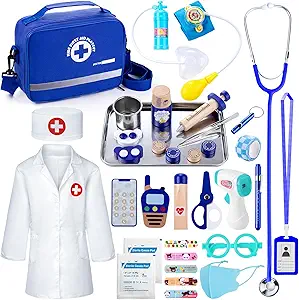
A Doctor Kit for Kids is a classic educational toy that serves as a bridge between imaginative play and real-world understanding. These kits are designed to transform “doctor visits” from a scary experience into a fun, interactive role-playing session. In 2026, modern doctor kits have evolved to include more realistic, sensory-based tools that help children develop empathy, fine motor skills, and an interest in science and healthcare.
What is Usually Inside a Kids’ Doctor Kit?
A comprehensive set typically includes a variety of medical tools made from child-safe materials like BPA-free plastic or wood:
- Electronic Stethoscope: Many modern kits feature a stethoscope that makes realistic heartbeat sounds and lights up when pressed against the chest.
- Blood Pressure Cuff: A manual pump that mimics the real sensation of a cuff tightening, helping kids understand the process.
- Otoscope and Ophthalmoscope: Small light-up tools to “check” ears and eyes.
- Thermometer and Syringe: Spring-loaded syringes and adjustable thermometers allow kids to simulate giving check-ups and “medicine.”
- Doctor’s Coat and ID Badge: Dress-up elements that help children fully immerse themselves in the role of a healthcare professional.
Developmental Benefits of Medical Play
- Reducing “White Coat” Anxiety: By handling the tools themselves, children become familiar with medical equipment, which significantly reduces fear and anxiety during actual doctor appointments.
- Building Empathy: Playing “doctor” requires the child to care for a “patient” (usually a parent or a stuffed animal), fostering a sense of nurture and concern for others’ well-being.
- Language and Social Skills: Role-playing encourages children to explain what they are doing, use new vocabulary (like “heartbeat” or “temperature”), and practice communication.
- Fine Motor Development: Using small tools like tweezers, clips, and thermometers helps refine hand-eye coordination and finger dexterity.
Key Features to Look For
- Storage Case: A sturdy carrying case is essential for keeping the many small pieces organized and making the kit portable for “house calls.”
- Realistic Sounds & Lights: Sensory features make the experience more engaging for younger children (ages 3–6).
- Safety Standards: Ensure the kit meets international toy safety standards (like ASTM or EN71) and has no sharp edges or small parts that could be a choking hazard for toddlers.
- Eco-Friendly Options: For a more sustainable choice, many parents now opt for wooden doctor kits which are durable, non-toxic, and have a timeless aesthetic.
Conclusion
A Doctor Kit for Kids is more than just a toy; it is an investment in a child’s emotional and cognitive growth. It encourages curiosity about the human body and promotes a positive outlook on health and medicine. Whether for a birthday gift or a classroom activity, a medical play set is a versatile tool that provides hours of creative entertainment while teaching valuable life lessons.