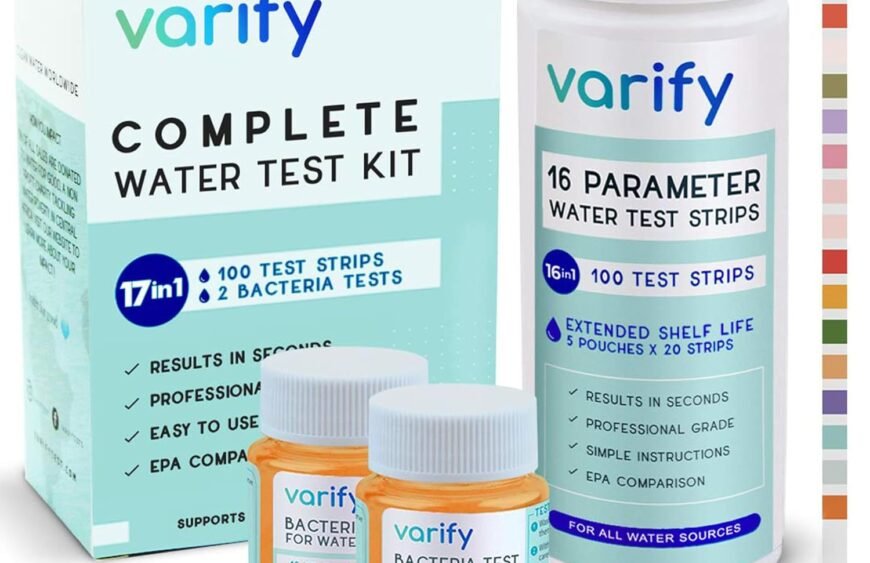
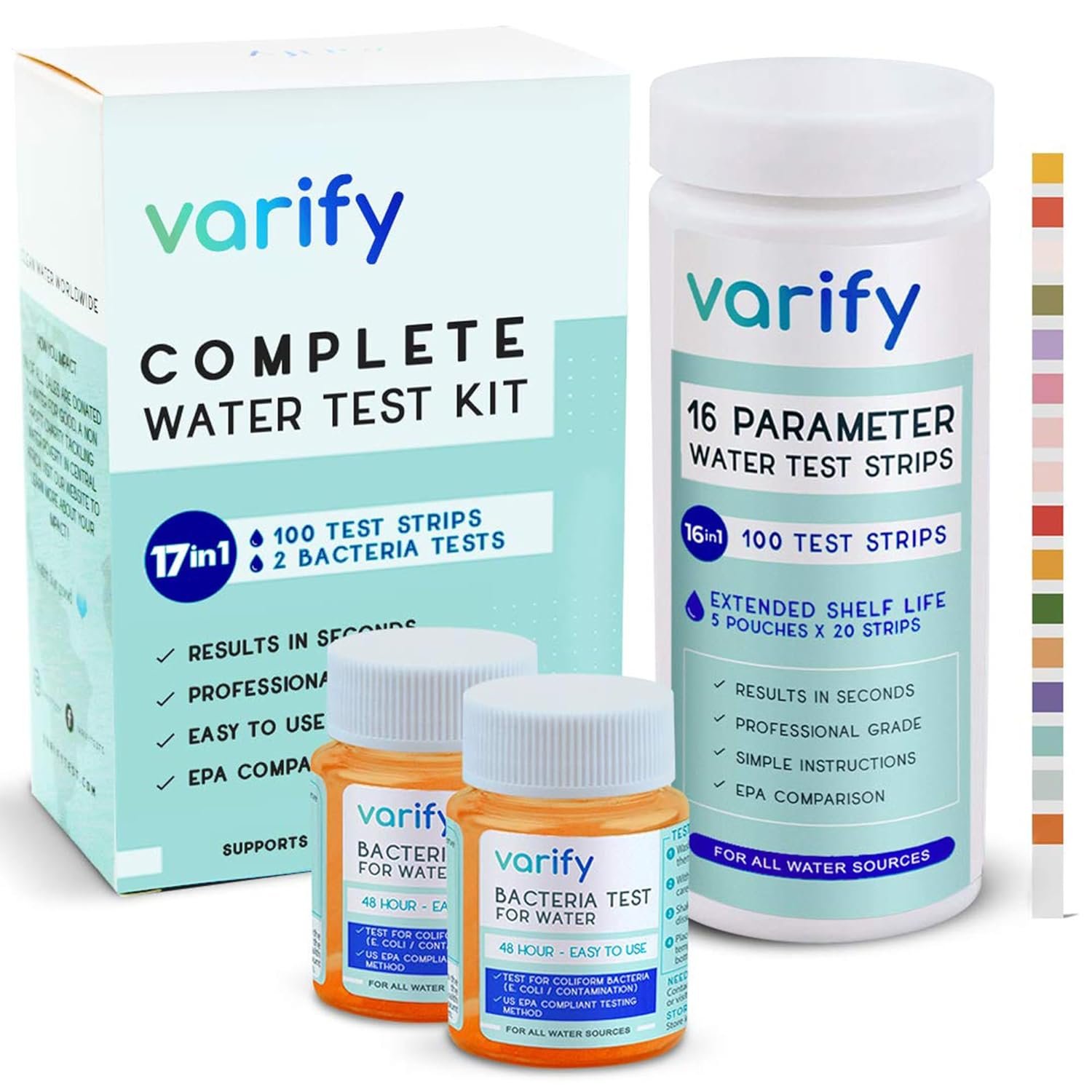
Drinking Water Test Kit — Complete Guide to At-Home Water Quality Testing
A drinking water test kit is a set of tools or strips that let you check the quality and safety of water at home, well water, or other drinking sources without needing a lab. With rising concerns about contaminants such as chlorine, metals, nitrates or bacteria, these kits help you see basic water quality levels quickly and conveniently.
What a Drinking Water Test Kit Does
These kits typically let you test multiple parameters of your water — depending on the kit — such as:
- Residual chlorine: Shows how much chlorine remains in treated water. Too much can create bad taste and smell.
- Hardness (calcium & magnesium): Indicates mineral content that affects taste and scaling.
- pH: Tells if water is acidic, neutral or alkaline; this can influence taste and pipe corrosion.
- Metals (iron, copper, zinc, nickel, etc.): Some kits let you check for iron or common metals that affect health or appearance.
- Organics & contaminants: Some advanced kits or specialized versions test for things like total organic carbon (TOC) as a general indicator of organic pollution.
These tests usually work through color changes — you dip a strip or use a test tube and compare the resulting color to a chart included in the kit to interpret results.
How Drinking Water Test Kits Work
There are two common home testing methods:
1. Test Strips
You dip strips into a water sample, wait a short time, and then compare the resulting colors to a chart. Common parameters include pH, chlorine, hardness, nitrate/nitrite and more — depending on how many each strip is designed to check.
2. Tube or Liquid Kits
Some kits use tube tests where you add drops of reagent into a water sample and look for color development. This method can sometimes be more accurate for individual parameters than strips.
The most simple kits give qualitative or range-based results, not precise numerical lab values, but they are excellent for basic diagnostics at home.
What You Can Learn from a Drinking Water Test
At-home drinking water kits help you understand:
- If your tap water is within normal ranges for common water quality indicators such as hardness or pH.
- Whether there is excess chlorine or metals that could affect taste, appearance or safety.
- Whether your water may benefit from filtration or further professional testing if contaminants are high.
Keep in mind that home kits offer general screening, not the full precision of a certified lab test; some serious contaminants like lead or bacterial pathogens may require specialized kits or lab tests.
When to Use a Drinking Water Test Kit
You might want to test your water if you:
- Have a private well or water source that isn’t regularly tested by a utility.
- Notice changes in taste, smell or clarity in your water.
- Want to check filtration effectiveness after installing a new water filter.
- Are concerned about minor contaminants but do not need detailed lab analysis.
Limitations and Accuracy
- Home water test kits are useful for basic screening and indication, but they are not as accurate or comprehensive as professional lab tests — especially for contaminants like lead, PFAS or bacterial pathogens.
- Test strip results are often range-based, not exact lab concentrations.
- For complete safety checks (e.g., heavy metals, VOCs, PFAS), a certified laboratory or specialized kit may be required.
How to Use a Drinking Water Test Kit
- Collect a clean water sample in a clean container.
- Dip the test strip or prepare reagents according to the instructions.
- Wait the indicated reaction time (often seconds to a few minutes).
- Compare the color result with the chart included in the kit.
- Interpret whether levels are within normal or concerning ranges and consider follow-up action.
Summary
A drinking water test kit lets you quickly screen your water quality at home by testing parameters like pH, hardness, chlorine, and sometimes metals or organics using dip-strips or tube tests. They’re excellent for basic surveillance, especially for well water or after installing filters, but they are not replacements for detailed lab analysis when precise or regulatory-level assurance is needed.
If you’d like, I can explain which specific parameters are most important to check first (e.g., bacteria vs metals) based on whether you use city water or well water — just tell me your situation!