laser level
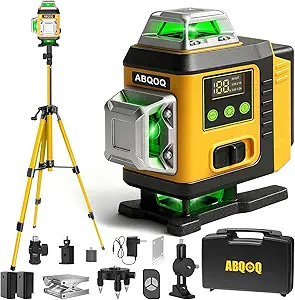
Laser Level — Precision Alignment for DIY, Construction & Home Projects
A laser level is a powerful tool that projects straight, visible laser lines onto surfaces to help you align, level, and position objects with professional accuracy. Whether you’re hanging shelves, installing cabinets, tiling walls, framing pictures, or doing construction work, a laser level eliminates guesswork and ensures precise results every time.
Laser levels come in many designs — from compact handheld units to advanced self-leveling models — making them useful for professionals and DIY enthusiasts alike.
Top Laser Levels to Consider
What Is a Laser Level?
A laser level projects a straight laser line or point onto walls, floors, or ceilings. These laser references help you measure, align, and level with higher accuracy than traditional bubble levels. Many models offer horizontal, vertical, and cross-line projections, and some advanced versions include 360° coverage for full room layout.
Laser levels are ideal for tasks that require consistency over distances or multiple points of reference.
Key Benefits of Using a Laser Level
| Benefit | Why It’s Useful |
|---|---|
| Accurate Alignment | Projects level lines with minimal error |
| Time-Saving | Speeds up layout work versus manual marking |
| Hands-Free Operation | Mount on tripods or magnetic bases |
| Versatile Use | Works for walls, floors, ceilings, and corners |
| Visual Clarity | Bright lasers are easier to see than chalk lines |
Laser levels are especially valuable when your project demands straight, balanced layouts across longer spans or uneven surfaces.
Common Types of Laser Levels
| Type | Typical Use |
|---|---|
| Dot Laser | Marks specific level points |
| Line Laser | Projects straight horizontal or vertical lines |
| Cross-Line Laser | Projects intersecting lines for square layouts |
| Rotary Laser | 360° coverage for large spaces and outdoor use |
| Self-Leveling | Automatically levels itself for precise lines |
Self-leveling models help ensure your laser line is true even if the tool isn’t perfectly placed.
How to Choose the Right Laser Level
| Feature | What to Look For |
|---|---|
| Laser Visibility | Green lasers are brighter than red for daylight use |
| Accuracy | Check ± mm/m rating for precision needs |
| Range | Longer range for larger rooms or outdoor jobs |
| Self-Leveling | Useful for quick setup without manual adjustment |
| Mounting Options | Tripod threads, magnetic mounts, or wall brackets |
Choosing features based on your projects — from simple household tasks to professional build jobs — ensures you get the performance you need.
Everyday Uses for Laser Levels
- Hanging shelves or artwork
- Tiling walls or floors
- Installing cabinets and countertops
- Framing interior walls
- Laying out lighting or electrical lines
- Aligning fence posts or decking
Laser levels help you get consistent, repeatable layouts with fewer mistakes and rework.
How to Use a Laser Level (Basics)
- Set Up on a Flat Surface or Tripod: Place your laser level securely.
- Power On & Self-Level (if equipped): Allow the unit to adjust automatically.
- Align Laser Lines: Position laser lines where you need them.
- Mark Your Reference Points: Use the laser as your guide for measurements.
- Verify Level: Check with a bubble level as needed for confirmation.
Laser lines replace chalk or manual marking, making layout work faster and cleaner.
Safety Notes
- Avoid direct eye exposure: Never stare directly into the laser beam.
- Use appropriate safety gear if working at heights or with power tools.
- Check battery levels: Ensure consistent laser projection throughout your task.
Laser levels are safe tools when used correctly and help improve accuracy without added risk.
Final Summary
A laser level is an essential tool for anyone serious about precision and speed in alignment and leveling tasks. With features like self-leveling, cross-line projection, and bright, easy-to-see beams, laser levels make it simpler to tackle both simple and complex projects — from home DIY jobs to professional construction duties.
Disclaimer: This article contains affiliate links. If you purchase through these links, we may earn a small commission at no additional cost to you. We recommend laser levels with accurate leveling, bright laser visibility, and versatile mounting options for reliable everyday use.