MINI-Doppler Detectr
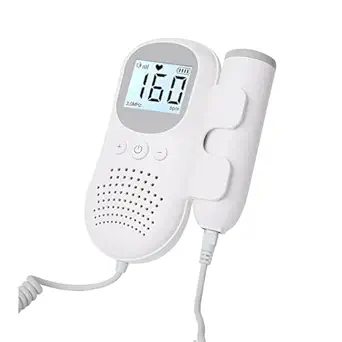
The MINI-Doppler ES-100 (specifically the Hadeco ES-100VX) is a professional-grade, handheld ultrasonic device used in both vascular and obstetric medicine. While it is famously known for its high-fidelity audio, it is important to distinguish between the different models in this series regarding how they “display” the heart rate.
1. Detection: The Heartbeat “Sound”
The ES-100 utilizes Continuous Wave (CW) ultrasound technology. When used with a 2 MHz fetal probe, it can detect the fetal heartbeat as early as 10–12 weeks of pregnancy.
- Audio Fidelity: Hadeco is renowned for “Great Sounds”—clear, crisp audio that helps clinicians distinguish the rhythmic “galloping horses” sound of a fetal heart from maternal blood flow or placental “whooshing.”
- Probes: It uses interchangeable probes. For fetal heart rate (FHR), the 2 MHz probe is required, whereas 5, 8, or 10 MHz probes are used for vascular (blood flow) checks.
2. Display: Visualizing the Rate
There is often confusion between the ES-100VX and the ES-100V3:
- ES-100VX (The Pocket Standard): This model is primarily audio-only. It does not have a built-in LCD screen to show a numerical heart rate. A practitioner must listen to the audio and manually count the beats per minute (BPM) using a watch.
- ES-100V3 (The Digital Upgrade): If you require a visual display, the ES-100V3 model includes a backlit LCD. It calculates and displays:
- Numerical Fetal Heart Rate (BPM).
- Heart Rate Waveform (the visual “pulse” graph).
- Battery Status.
3. Usage Guide for Fetal Monitoring
To get a clear signal with an ES-100 series device:
- Gel is Essential: You must use ultrasound transmission gel. Without it, the air between the probe and skin will cause static and prevent the waves from reaching the fetus.
- Location: In early pregnancy, place the probe very low on the abdomen (near the pubic bone). In later pregnancy, move higher as the fetus grows.
- Angle: Tilt the probe slightly in different directions until the sound is loudest. The heart rate should typically be between 110 and 160 BPM.
4. Why Professionals Choose Hadeco
- Durability: Unlike “toy” home dopplers, the ES-100 is built for hospital use with high-impact materials.
- Auto-Shutoff: It preserves its 9V battery by automatically turning off after 5 minutes of inactivity.
- Headphone Jack: Allows for private listening or connection to recording software/apps to share the heartbeat with family or other doctors.
Summary Table
| Feature | ES-100VX | ES-100V3 |
|---|---|---|
| Fetal Detection | Yes (with 2MHz probe) | Yes (with 2MHz probe) |
| Audio Output | Internal Speaker / Headphones | Internal Speaker / Headphones |
| Visual LCD Display | No | Yes (Rate & Waveform) |
| Power Source | 9V Alkaline Battery | 9V Alkaline Battery |
| Primary Use | Quick bedside checks | Detailed monitoring & analysis |