Mole Repellent — Complete Guide to Protecting Your Garden and Lawn
A mole repellent is a product or method designed to discourage moles from tunneling and living in lawns, gardens, and yards. Moles are small burrowing mammals that feed mainly on earthworms and grubs. While they help control some insect populations, their tunneling activity can damage grass, uproot plants, and create unsightly mounds and ridges. Mole repellents aim to make your soil unattractive or uncomfortable to these animals without necessarily harming them.
This guide covers what moles are, how repellents work, the types available, when to use them, and practical tips for effective mole control.
Understanding Moles and Their Behavior
Moles are insectivores — not rodents — and live most of their lives underground. They build networks of tunnels to:
- Search for food (earthworms, grubs, insects)
- Move quickly through soil
- Create nesting and feeding sites
You might notice mole activity by seeing:
- Raised ridges in your lawn
- Rounded soil mounds
- Uneven ground or tunneling damage to plant roots
Unlike pests that eat plants, moles aren’t attracted by flowers or vegetables; they’re attracted by soil rich in insects and worms.
How Mole Repellents Work
A mole repellent does not usually kill moles. Instead, it makes the environment unpleasant or undesirable so moles choose to leave or avoid the area. Methods include:
Strong Odors or Tastes
Certain repellents use natural or synthetic scents that irritate a mole’s sensitive nose or unpleasant tastes in the soil.
Vibrations or Noise
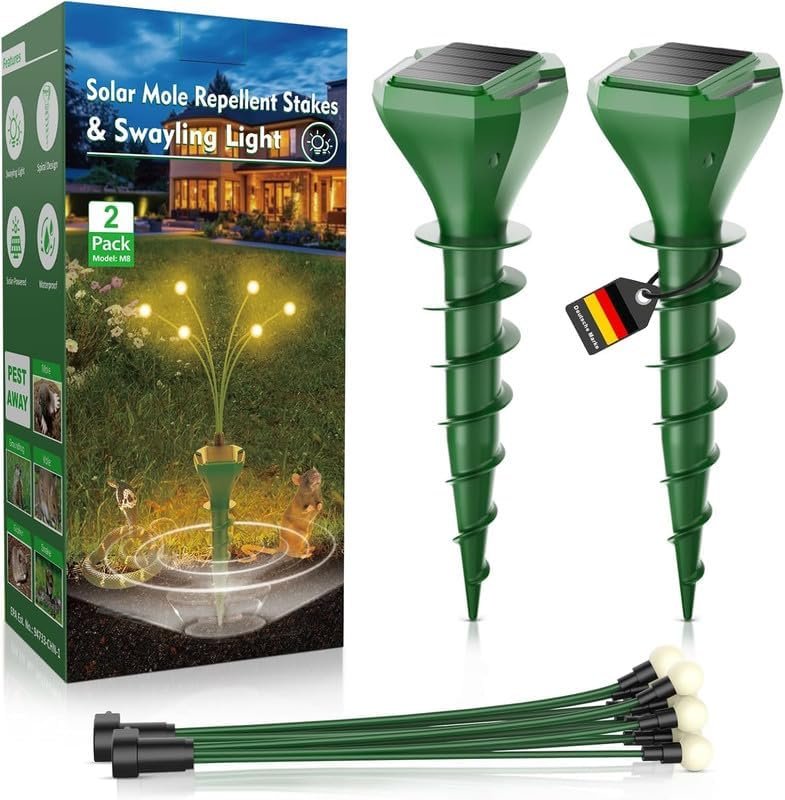
Some mechanical or solar‑powered devices create ground vibrations or sonic pulses that disturb tunneling behavior.
Chemical Irritants
Repellents like castor oil‑based products coat the soil and can make it less appealing for tunneling.
Each type discourages moles in different ways while generally being harmless to people, pets, and plants when used as directed.
Types of Mole Repellents
1. Castor Oil‑Based Repellents
These are among the most widely used mole repellents. Castor oil in the soil creates an unpleasant environment for moles and other burrowing animals.
- Usually applied as granules or liquid spray mixed with water
- Safe for lawns and gardens when applied correctly
- Needs to be reapplied periodically, especially after rain
Castor oil doesn’t harm earthworms or plants, but it makes the soil feel unwelcoming to moles.
2. Sonic or Vibration Devices
These repellents are installed in the ground and emit:
- Underground vibrations
- Sonic pulses or intermittent sounds
Moles are sensitive to ground movement and may avoid areas with frequent vibration.
These devices are:
- Battery‑powered or solar powered
- Environmentally friendly
- Effective in some cases but may require multiple units for large areas
3. Natural Home Remedies
Some gardeners use home‑based repellents, such as:
- Planting certain plants (e.g., daffodils, marigolds or alliums) believed to be unattractive to burrowing animals
- Pouring strong‑smelling substances like castor oil mixtures or garlic solutions into tunnels
Effectiveness varies, and these methods often work best in combination with other practices.
4. Predator Urine Products
Moles may avoid areas that smell like predators. Some repellents use synthetic predator urine or scent markers (fox, coyote) to trick moles into believing predators are nearby.
These products are usually:
- Applied around garden borders
- Reapplied after rain
When to Use Mole Repellent
Consider using repellents if you notice:
- Fresh mole tunnels or mounds
- Increased activity after rain or irrigation
- Damage to roots or disturbed soil
- Pets stepping in soft, uneven ground
Early detection and prevention often work better than waiting for extensive damage.
Application Tips for Best Results
1. Treat the Problem Area
Moles often use specific paths. Treat areas where tunnels and ridges are visible.
2. Apply Evenly
For granular repellents, spread the product evenly across the lawn and water it in as directed.
3. Reapply After Rain
Many repellents lose effectiveness after heavy rain, so follow label instructions on reapplication.
4. Combine Methods
• Repellents + sonic devices
• Repellents + good lawn care
• Repellents where activity is highest
Combination approaches often work best.
5. Be Patient
Repellents may take time to discourage moles; results often appear over weeks rather than immediately.
Safety and Environmental Considerations
- Always follow the product’s label instructions.
- Most repellents are non‑toxic to pets and children when used properly, but avoid direct ingestion.
- Avoid overuse of chemicals in vegetable gardens unless the product is labeled as food‑safe.
- Sonic and vibration devices are safe and don’t use chemicals.
Alternatives to Repellents
If repellents aren’t effective, you may consider:
- Traps (set by professionals)
- Improving soil health and reducing insect prey (moles are drawn to insect‑rich soil)
- Landscape changes (less frequent irrigation)
- Physical barriers (metal netting around specific garden beds)
Professional pest control firms can help with targeted solutions if moles persist.
Summary
A mole repellent helps discourage moles from living and burrowing in lawns and gardens without necessarily harming the animals. Options range from castor oil‑based soil treatments to sonic/vibration devices and scent‑based repellents. When applied correctly and combined with good garden care practices, repellents can be an effective part of a strategy to protect your landscape from mole damage.
If you tell me the size of your yard and the extent of mole activity, I can suggest the most suitable repellent type and how often to use it for your situation.