Wall Cleaning Mop
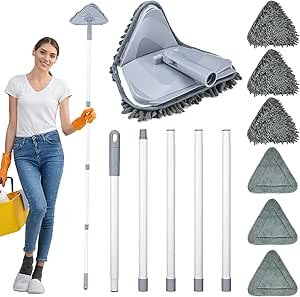
Reaching New Heights: Why a Wall Cleaning Mop is the Secret to a Spotless Home
We often scrub our floors and dust our shelves, but walls are frequently neglected. Over time, walls accumulate cobwebs, dust, and even oily residue from cooking or fingerprints. Cleaning them by hand with a rag and a ladder is not only exhausting but can be dangerous.
The wall cleaning mop—typically featuring a triangular head and an extra-long handle—has become a viral cleaning essential in 2026. It allows you to reach high ceilings, corners, and baseboards with your feet safely on the ground.
Key Features of a Professional Wall Mop
Not all mops are designed for vertical surfaces. A true wall cleaning tool includes specific features that prevent it from flipping over or dripping:
- Long, Lightweight Handles: Look for stainless steel or aluminum poles that extend between 60 to 85 inches. Because you’ll be holding the mop above your head, the material must be lightweight to prevent arm fatigue.
- 360° Rotating Triangular Head: The triangular shape is superior for walls because it can wedge into 90-degree corners and clean along the edges of crown molding where dust loves to hide.
- Dual-Fiber Pads: Most high-end wall mops (like those from JEHONN or Bona) come with two types of pads:
- Chenille (Microfiber “Noodles”): Perfect for dry dusting and grabbing cobwebs without scratching the paint.
- Flat Microfiber: Ideal for wet cleaning to remove scuffs, grease, or stains.
How to Clean Your Walls Like a Pro
To avoid streaks or damaging your paint, follow this expert-recommended sequence:
- The Dry Dust First: Never start with a wet mop. Use a dry chenille pad to remove loose dust and spiderwebs. If you apply water directly to a dusty wall, you’ll likely create “mud” streaks that are harder to clean.
- Top-to-Bottom Technique: Always work from the ceiling down to the baseboards. This ensures that any drips or falling dust are cleaned as you move lower.
- The “S” Pattern: Move the mop in a continuous “S” shape or vertical strokes. This ensures you cover every square inch without missing spots.
- Minimal Moisture: If you are wet-cleaning, the pad should be damp, not dripping. Too much water can seep into drywall or cause “bubbling” in certain types of latex paint.
Beyond Just Walls: A Multi-Surface Tool
The beauty of a dedicated wall mop is its versatility. Most users find it becomes their “everything” tool for hard-to-reach areas:
- Ceilings and Fans: Easily wipe down popcorn ceilings or the tops of ceiling fan blades.
- High Windows: Many wall mops come with a squeegee attachment, turning them into professional window cleaning tools for exterior glass.
- Baseboards: No more bending over or crawling on your knees. Use the edge of the triangular mop to scrub baseboards while standing upright.
- Under Furniture: The slim profile of the mop head allows it to slide under low-clearance sofas and beds where standard mops can’t reach.
Conclusion
A wall cleaning mop is a low-cost investment that significantly reduces the time and physical effort required to deep-clean your home. By choosing a model with an extendable handle and machine-washable pads, you ensure your walls stay looking freshly painted for years to come.