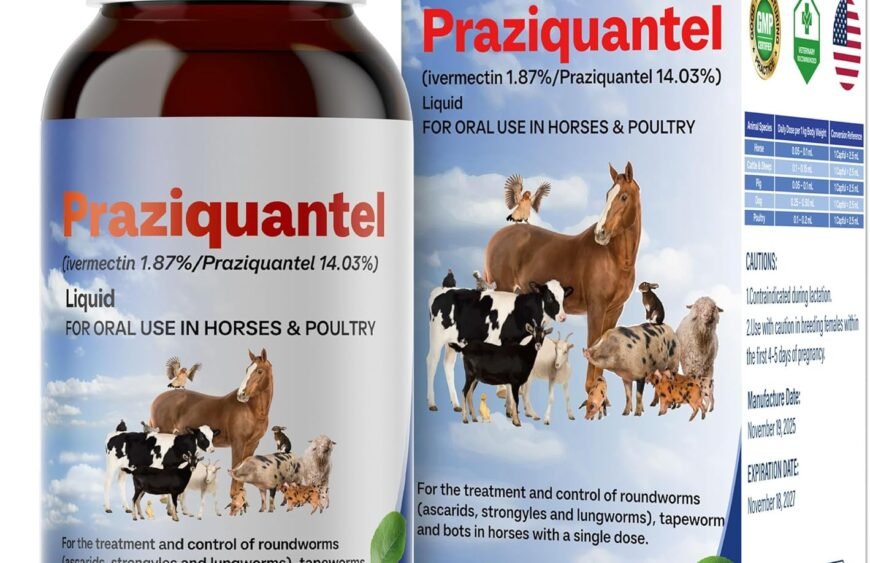
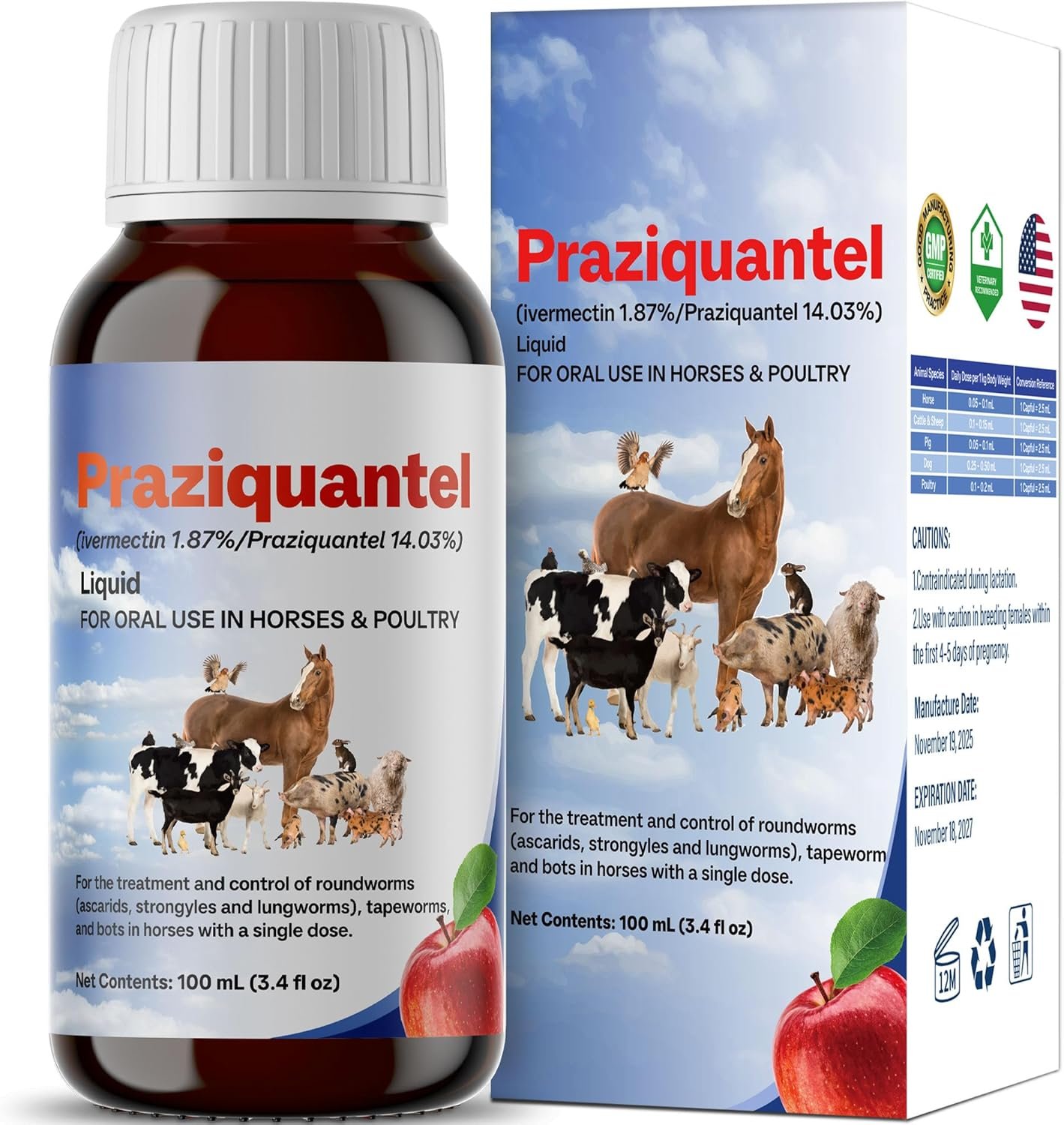
Praziquantel for Horses – Comprehensive Guide
Praziquantel is a widely used antiparasitic (anthelmintic) medication for horses, primarily effective against tapeworms (Anoplocephala species). In equine health management, it plays a crucial role in parasite control programs, helping maintain digestive health, reduce the risk of colic, and improve overall well-being. It is often included in combination dewormers with drugs such as ivermectin or moxidectin to provide broad-spectrum parasite protection.
What Praziquantel Does
Praziquantel works by disrupting the outer surface of tapeworms, causing paralysis and death of the parasite. Once the tapeworm is immobilized, it is digested by the horse’s natural digestive enzymes. This mechanism effectively eliminates tapeworms, which can otherwise cause digestive disturbances, intestinal blockages, and colic.
While praziquantel is highly effective against tapeworms, it does not target other common equine parasites such as strongyles, roundworms, or bots. Therefore, it is typically included in combination products to ensure comprehensive parasite management.
Common Praziquantel-Containing Products
Many horse dewormers combine praziquantel with other anthelmintics to cover a wide range of internal parasites. Some widely used products include:
- Quest Plus Gel (Moxidectin + Praziquantel): Offers broad-spectrum protection, including tapeworms, strongyles, and bots.
- Equimax Oral Gel (Ivermectin + Praziquantel): Provides a comprehensive solution for nematodes and cestodes in one dose.
- IverQuest Duo: Combines ivermectin with praziquantel for wide parasite coverage, suitable for adult horses.
These products are formulated as oral pastes or gels, and dosing is adjusted according to the horse’s body weight using calibrated dosing syringes.
Dosage and Administration
Praziquantel is administered orally, usually as part of a combination product. The correct dose is based on body weight, ensuring effective parasite control while avoiding underdosing or overdosing.
- Combination products: The dosing syringe is calibrated to deliver the correct amount of praziquantel alongside ivermectin or moxidectin.
- Standalone praziquantel: Scientific studies indicate a single oral dose of approximately 1 mg per kg of body weight can be effective against tapeworms, though practical use is mostly within combination products.
Accurate measurement is critical, and veterinarians often recommend weighing the horse or estimating body weight carefully before administering the medication.
When to Use Praziquantel
Praziquantel is primarily used:
- To treat tapeworm infestations: Targeting Anoplocephala species in the digestive tract.
- As part of routine deworming programs: Often administered once or twice a year, depending on regional parasite risk and horse management practices.
- In broad-spectrum dewormers: Combined with ivermectin or moxidectin to cover other common equine parasites, such as strongyles, roundworms, and bots.
Young horses, particularly foals under six months, should not be treated with adult dewormers containing praziquantel unless advised by a veterinarian.
Safety and Precautions
- Veterinary guidance: Praziquantel should always be used under veterinary supervision to ensure proper dosing, scheduling, and combination with other dewormers.
- Body weight accuracy: Proper dosing depends on accurate weight measurement; underdosing can lead to ineffective treatment, and overdosing can cause side effects.
- Follow product instructions: Different products may have specific administration guidelines, contraindications, and dosing intervals. Always read the label carefully.
- Monitor horse health: After administration, monitor horses for any unusual behavior, appetite changes, or signs of digestive upset.
How Praziquantel Fits Into Parasite Control
Tapeworms are only one type of parasite affecting horses. A comprehensive parasite control plan may also include treatment for:
- Strongyles (large and small): The most common internal parasite in horses.
- Roundworms (ascarids): Especially in young horses.
- Bots: Larvae of the botfly that can affect the stomach lining.
By including praziquantel in a deworming program, horse owners ensure tapeworms are effectively managed, reducing the risk of colic and other digestive complications. Veterinarians often recommend combining praziquantel treatments with seasonal strategic deworming schedules.
Benefits of Praziquantel
- Effective against tapeworms: Targets a parasite that is not fully controlled by other common dewormers.
- Improves digestive health: Reduces the risk of intestinal blockages and colic caused by tapeworm infestations.
- Convenient combination use: Often included in broad-spectrum dewormers for one-step parasite control.
- Safe when used correctly: With veterinary supervision, praziquantel is well-tolerated by horses of all ages above recommended minimums.
Recommended Use Strategy
- Timing: Many veterinarians recommend administering praziquantel-containing products in late fall or early winter, when tapeworm prevalence is higher.
- Integration: Include praziquantel in a year-round deworming strategy that addresses nematodes and bots as well.
- Monitoring: Fecal egg counts can help guide the timing and necessity of treatment, although tapeworm eggs are harder to detect than other parasites.
Conclusion
Praziquantel is an essential tool in equine parasite control, specifically targeting tapeworms that can affect the horse’s digestive system. When used in combination products like ivermectin or moxidectin gels, it offers broad-spectrum protection against multiple parasite types. Proper dosing based on body weight, following veterinary guidance, and integrating praziquantel into a comprehensive deworming schedule ensures optimal horse health, reduces the risk of colic, and maintains digestive efficiency.
By understanding the role of praziquantel and its application, horse owners can effectively protect their animals from tapeworms and support long-term health and performance.