Seat Cushions — Complete Guide to Comfort, Support & Choosing the Right One
Seat cushions are removable pads designed to make sitting more comfortable, supportive, and ergonomic. They’re used in a wide range of settings — from office chairs and dining seats to car seats, wheelchairs, stools, and even floor seating. A good seat cushion can reduce pressure on the hips and tailbone, improve posture, relieve discomfort, and support long periods of sitting.
This guide explains what seat cushions are, how they work, the types available, key features to look for, and how to choose the right one for your needs.
What a Seat Cushion Is
A seat cushion is a portable cushion that you place on a chair or seat to enhance comfort. It typically consists of a foam or gel core covered in a soft, washable fabric. Some are designed for general comfort, while others target ergonomic support, pressure relief, or health‑related concerns like tailbone pain or poor posture.
They are commonly used by:
- Office workers
- Drivers and commuters
- Gamers
- Students
- People with back or hip discomfort
- Wheelchair users
- Anyone who sits for long periods
How Seat Cushions Work
Seat cushions improve sitting comfort and body mechanics by:
1. Distributing Pressure
They spread your body weight over a larger area, decreasing pressure on the hips, tailbone (coccyx), and lower back.
2. Supporting Posture
Ergonomic shapes can encourage a more natural spine alignment, helping reduce slouching and lower back strain.
3. Enhancing Comfort
Soft memory foam or gel elements add padding, which makes hard seats more comfortable.
4. Reducing Pain & Fatigue
By supporting better posture and reducing pressure points, they help reduce soreness and fatigue during long sitting periods.
Types of Seat Cushion Materials
1. Memory Foam
- Soft, contouring feel
- Molds to your shape
- Good for pressure relief and comfort
Memory foam is one of the most popular materials because it adapts to your body and provides lasting support.
2. High‑Density Foam
- Firm support
- Good for posture and durability
- Ideal for heavier users or long sessions
High‑density foam cushions don’t compress as quickly and are better for consistent upright support.
3. Gel‑Infused Cushions
- Cooling sensation
- Combines foam and gel layers
- Helps reduce heat buildup
Gel helps keep you cool and alters pressure distribution for added comfort.
4. Inflatable Cushions
- Adjustable firmness
- Easy to carry
- Great for travel
Inflatable cushions let you tailor the feel to your preference and pack down small for portability.
5. Wedge or Ergonomic Shaped Cushions
- Angled design supports forward pelvic tilt
- Encourages spine alignment
- Ideal for posture support
These are especially useful if you want to reduce slouching and maintain a healthier seated position.
Common Shapes & Designs
| Shape | Best For |
|---|---|
| Rectangular/Standard | Everyday comfort on most chairs |
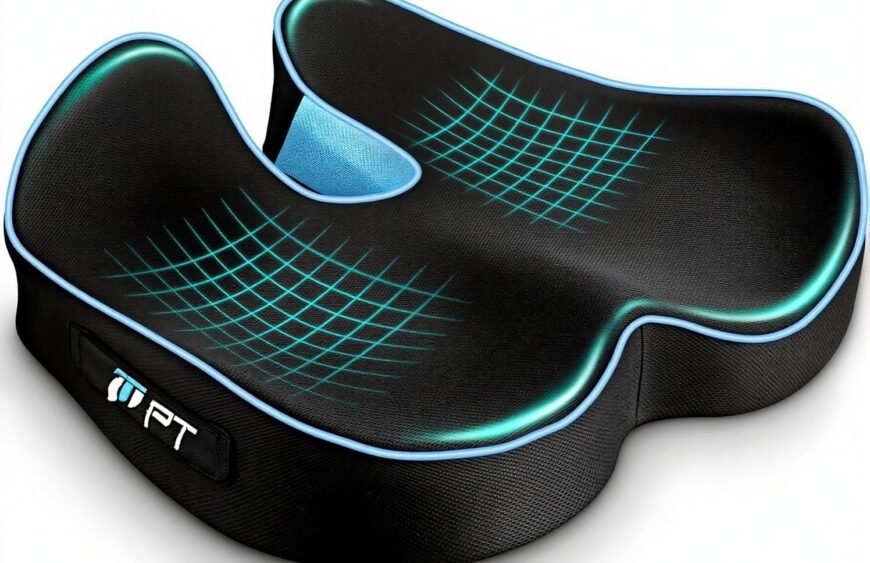
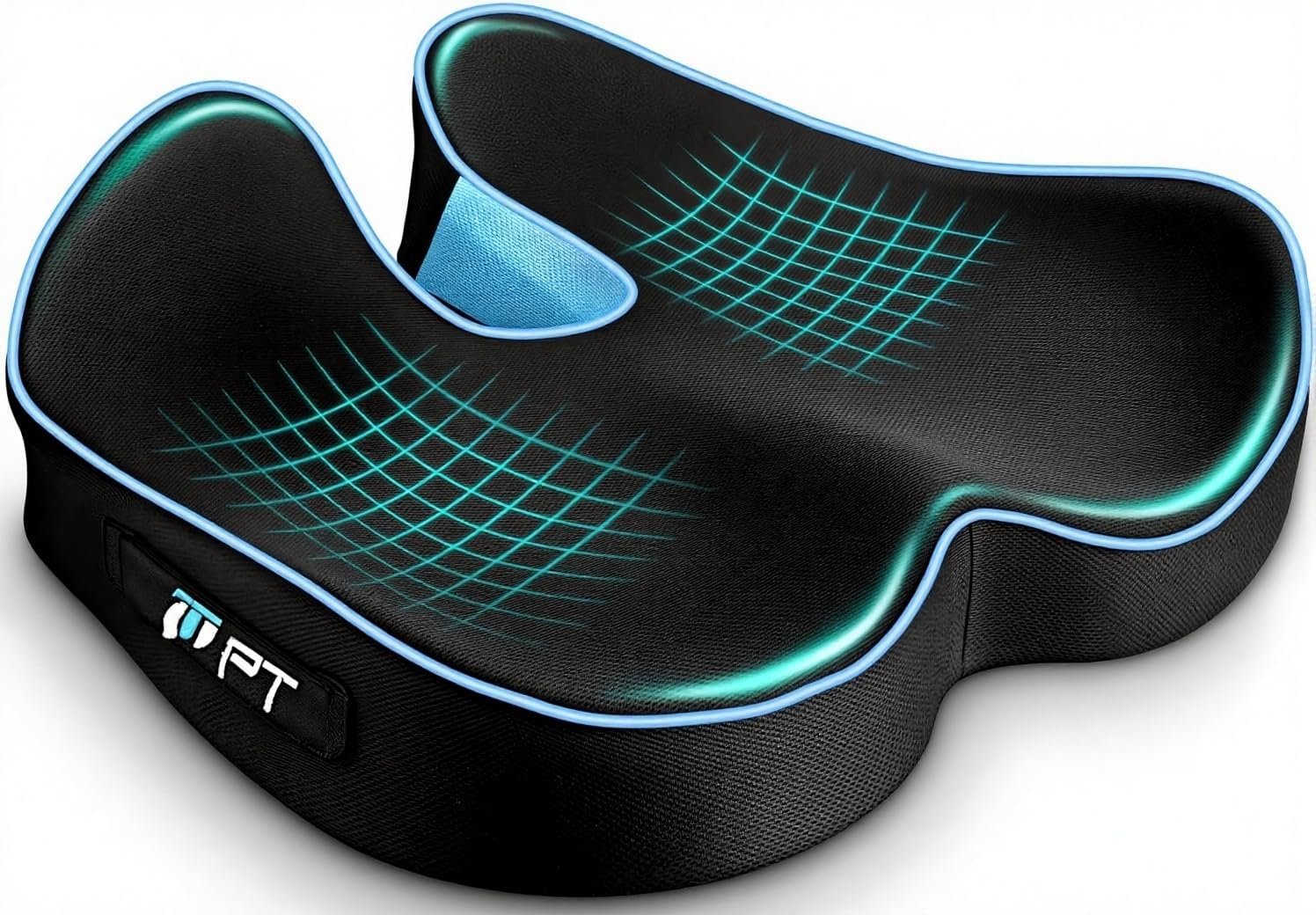
| U‑Shaped (Tailbone Cut‑Out) | Reducing pressure on the coccyx/tailbone |
| Wedge | Posture support and forward tilt |
| Contour/Ergonomic | Back support and spinal alignment |
| Donut | Pressure relief for sitting injuries or surgery recovery |
Key Features to Look For
1. Comfort & Firmness
- Soft: Plush feel, less structured
- Medium: Balance of support + comfort
- Firm: Best for posture and pain relief
Choose based on how long you sit and whether you prefer softness or structural support.
2. Cover Material
- Removable & washable — easy to clean
- Breathable fabrics — reduce heat and sweating
- Non‑slip bottom — keeps cushion in place
A removable cover makes hygiene and maintenance much easier.
3. Portability
- Carry handles
- Lightweight design
- Foldable or compressible
Great if you move between office, car, home, or trips.
4. Size & Thickness
- Standard (1.5–3 in): Everyday comfort
- Thicker (3–4+ in): Long sittings or pressure relief
Match thickness to seat height so your feet can still reach the floor comfortably.
Benefits of Using a Seat Cushion
Better Posture
Supports the natural curve of your spine and helps prevent slouching.
Pressure Relief
Reduces strain on hips, lower back, and tailbone — useful for prolonged sitting.
Pain Reduction
Can help alleviate discomfort from sciatica, lower back pain, or prolonged sitting.
Enhanced Comfort
Transforms hard or worn seats into more comfortable surfaces.
Portable Seating Upgrade
Makes any chair more comfortable — at work, in the car, or at home.
How to Use a Seat Cushion Effectively
- Position Correctly — Place cushion flat on the seat with the thicker end toward the back.
- Maintain Foot Placement — Ensure feet rest comfortably on the ground.
- Pair With Back Support — If needed, add a lumbar cushion for full support.
- Check Alignment — Hip level should be slightly higher than knees for best posture.
- Use Daily if Needed — A cushion works best with consistent use for posture and comfort.
Who Benefits Most
- Office workers who sit long hours
- Drivers and commuters
- Gamers and students
- People with lower back or tailbone discomfort
- Wheelchair users needing pressure relief
- People recovering from injuries or surgery
Tips for Choosing the Right Seat Cushion
Match Your Sitting Time
- Short sitting (up to 2 hours): Standard foam cushion
- Long sitting (> 2–4 hours): Memory foam or gel cushion
- Frequent use + posture issues: Ergonomic or wedge cushion
Consider Your Chair Type
Office chair, car seat, dining chair, or wheelchair — choose a cushion that fits the seat surface without overhang.
Check Weight & Portability
If you move your cushion between seats, a lightweight and portable design with a handle is ideal.
Summary
Seat cushions are versatile, removable pads that make sitting more comfortable and supportive across a variety of chairs and situations. Whether you’re looking for pressure relief, posture support, or extra padding, there’s a cushion design to match your needs — from memory foam comfort pads to ergonomic wedges and gel‑infused cooling cushions.
When choosing one, consider material (memory vs foam vs gel), shape (standard, U‑cut, wedge), thickness, portability, and seat type. The right cushion can improve comfort, reduce pain, and support healthier sitting habits throughout your day.
If you tell me where you plan to use it most (office chair, car seat, wheelchair, etc.) and any specific comfort needs (e.g., pain relief or posture support), I can recommend a more tailored option.