Bunion Corrector for Women
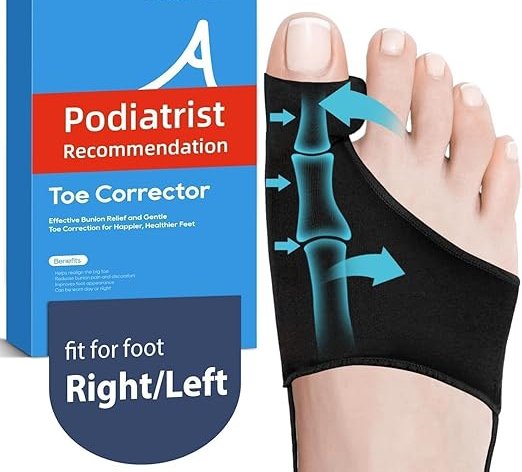
Orthopedic Comfort: Big Toe Bunion Corrector for Women & Men
A Bunion Corrector is a non-invasive orthopedic device designed to alleviate the pain and pressure caused by Hallux Valgus—a condition where the big toe leans inward toward the other toes. In 2026, these devices have become highly advanced, offering adjustable tension and breathable materials that make them suitable for both day and night use. While they do not “cure” a bunion (only surgery can permanently realign the bone), they are essential for slowing progression and providing much-needed relief.
Key Types of Bunion Correctors
Depending on your activity level and the severity of your bunion, you may choose from several designs:
- Adjustable Splints with Knobs: These are the most powerful correctors for 2026. They feature a mechanical knob that allows you to precisely adjust the angle of the big toe. Because they are slightly bulky, they are best used while resting at home or sleeping.
- Gel Toe Separators: These are small, soft silicone spacers that fit between the big toe and the second toe. Their low profile makes them ideal for wearing inside wide-toe-box shoes during the day.
- Bunion Sleeves: Made of stretchy fabric with an integrated gel pad, these sleeves slide over the foot to cushion the “bump” from friction against shoes, providing both protection and gentle alignment.
- Night Regulators: These rigid braces are designed to hold the toe in a straight position for several hours while you sleep, helping to stretch tight tendons and ligaments.
Features to Look For in a Premium Corrector
- Anti-Slip Heel Strap: Look for models with an extra strap around the heel. This prevents the corrector from sliding off or rotating during the night.
- Breathable & Hypoallergenic Fabric: Since these are often worn for 8+ hours, materials like medical-grade Lycra or perforated neoprene are essential to prevent skin irritation and sweating.
- Hinged Design: A hinged splint allows for some natural movement of the big toe joint, making it easier to walk around the house while wearing the device.
- Universal Fit: Most modern correctors are designed to fit both the left and right foot and are adjustable to accommodate various foot sizes for both men and women.
Best Practices for Effective Relief
To see the best results from your bunion corrector, consistency is key:
- Gradual Adjustment: If using a knob-based splint, start with a very gentle angle. Over the first two weeks, slowly increase the tension as your toe becomes more flexible.
- Combine with Foot Exercises: Use your corrector alongside “toe scrunches” (picking up a towel with your toes) to strengthen the intrinsic muscles of the foot.
- Wear Wide Shoes: A corrector cannot work effectively if it is crammed into narrow, pointed shoes. Pair your daytime separators with shoes that have a spacious toe box.
- Keep it Clean: Most fabric sleeves and gel spacers are machine-washable. Regular cleaning prevents bacteria buildup and maintains the elasticity of the material.
Conclusion
A Bunion Corrector is a practical and cost-effective way to manage foot health and maintain mobility. By providing a combination of alignment and cushioning, these devices help reduce the daily throb of bunion pain and prevent the deformity from worsening. For those looking for a non-surgical way to support their feet, a high-quality corrector is an indispensable tool in your wellness kit.